White Deer Twins on the Riverwalk

White Deer Twins on the Riverwalk
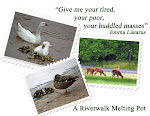
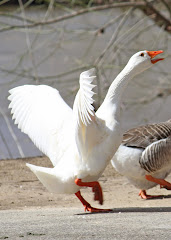
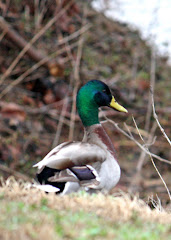
These rare white deer twins were born this summer and have found a safe home at Dan Daniel Park and on the Riverwalk
CLICK the large photo above to go to my web site.
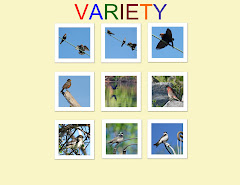
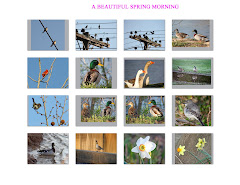
CLICK the image of the DAILY photos to enlarge the pictures.
CLICK the photos to the right to go to the blog for that particular day.
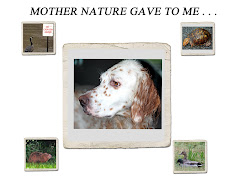
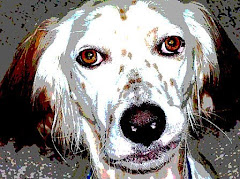
My name is David Hoffman. I teach English and journalism at Averett University, but I have two side interests - writing and photography. I also enjoy walking daily with my English setter, Sadie, and my wife, Elizabeth, on the Danville, Virginia, Riverwalk. As a novice to studying nature, I am fascinated by the slightest facets of the great outdoors, but most of my pictures are of birds - I don't know a lot about them, but I am learning more and enjoying taking pictures of them daily. I also take pictures of plants, other animals, and insects. All pictures posted for each day were taken on the day of my blog entry.

Leave a comment if you have the time or e-mail me at dhoffman@averett.edu


CHECK OUT TIFFANY AND PATRIK'S WEDDING PICTURES (click picture below)

Friday, July 30, 2010

Butterflies, Bees, Bears and Birds at Boone


(JULY 30, 2010) For three days we visited the cooler mountains of Boone, North Carolina, and enjoyed the fresh air, the breeze, and nature in addition to the Lovill House Inn where we stayed (by the way, this is not "product placement" in this entry - it is just the mention of a very comfortable location where we stayed for two nights). Scott and Anne were wonderful hosts.

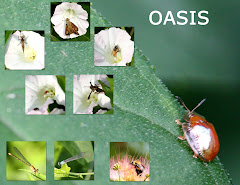
What I enjoyed the most about the inn (besides the good breakfasts) was the garden. The flowers attracted the beautiful butterflies and the busy bees who basked in the breath-taking beauty of that bounteous oasis of blooms. In the mornings the birds would start their chirping at 5:00 and would make their presence known as they visited the bird feeders placed in the garden. It was like Eden.

Speaking of birds - the first evening that we came in from a delicious dinner, I clicked the lock button on the car key and the car made a "chirp-chirp" sound as the locks went into place. From a tree nearby came a "chirp-chirp." I clicked the button again - "chirp-chirp." From the tree came, "chirp-chirp." For a few minutes I stood there clicking the lock button while the mockingbird in the tree responded. I would be there still, but the bird lost interest in this game long before I did.


We went to Grandfather Mountain on Wednesday and spent the day. The views from the top are awesome and inspiring. We visited the Grandfather Mountain museum and the two gift shops there. Then we saw some of the animals in their "natural" habitats (caged, but in a habitat that looks like where they should be). There were two cougars (I learned that bobcats, mountain lions, and pumas are other names for these cats and that the ones east of the Mississippi are smaller than the ones in the west), some white-tailed deer, three black bears, a golden eagle, and some otters (who were sleeping, so we didn't ACTUALLY see them, but saw their habitat).

We then walked across the swinging bridge at the top of the mountain. There were some visitors who had brought their dogs to the bridge, and half-way across, the dogs became frightened and refused to move. There was a traffic jam a mile high. When we got to the other side, the view was spectacular. However, some of the views on the way up the mountain were just as spectacular. It was kind of like having fire-works moments on the 4th of July. The "ooooooos" and the "awwwwwws" after each bright burst was the same experience we had as we saw one beautiful mountain view after the other.

On our way down the mountain we stopped at about the half way point and did a nature hike conducted by two naturalists from the park.
The 30-45 minute walk through the woods was informative as we learned about lichens and hardwoods and salamanders and flora and fauna native to the area. Very informative and worth the time spent.

After returning to Boone we made our usual visits to the Mast General Store and an antique store there. We enjoyed dinner that night at an Appalachian State University "watering hole," Macados, and then returned for our last night at the quaint cottage we had called home for two days.

It was three very good days as we went to the mountains to enjoy nature in a different environment from our daily walks on the Riverwalk.

I did get back on the Riverwalk this morning with Sadie - we did our usual 3 miles. I didn't take my camera today because I had more pictures to look at from our trip. I will take it, again, tomorrow.


Here is a chipmunk we saw near the garden at the Lovill House Inn.

Monday, July 26, 2010

THE BUG WITH TWO HEADS


(JULY 26, 2010) This morning Sadie and I got to the Riverwalk at about 6:30 to beat the heat. It wasn't as hot today as it has been over the past week, but it was very humid, and the Riverwalk was quiet.

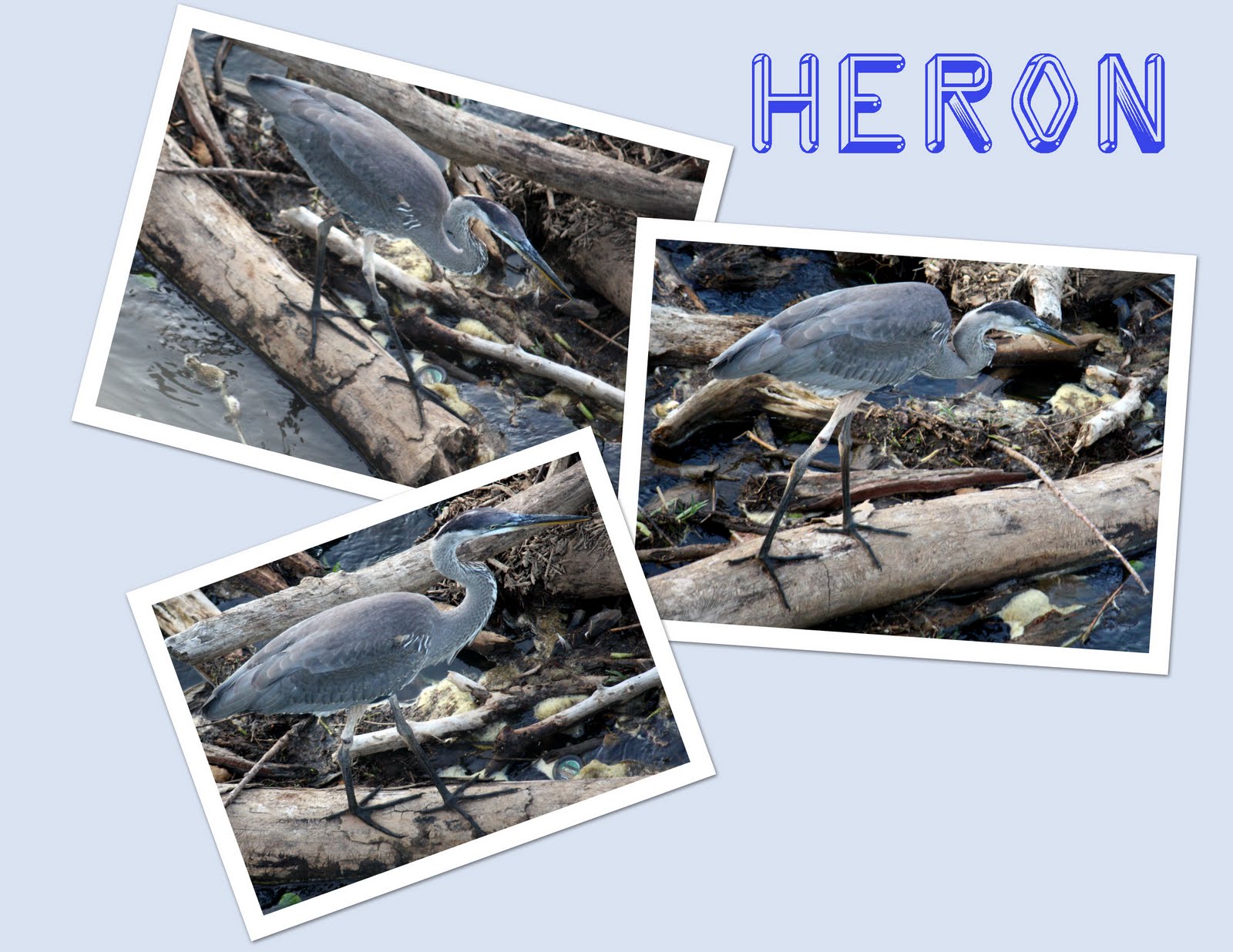
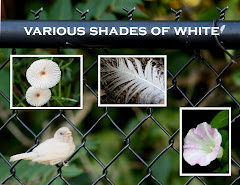
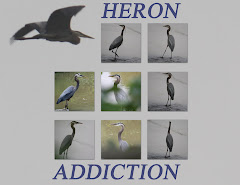
We did see the white-beige sparrow we have seen during the past few weeks near the bridge at the Public Works department. There was a heron in the water near the bridge that goes to the train station. I crossed the bridge to get a better shot, but when I got above where it had been, the heron had left.
It wasn't until I got about a half mile from the car when there was Jim Bob Billy Ray Numbhead running toward me yelling, "Come, see! Come, see! There's a bug over here with two heads. I think I found one of them Siam twins - you know those that has two heads."

Now, Jim Bob Billy Ray isn't the sharpest tool in the shed, but he was so enthused about his find that I had to take Sadie and go see this freak of nature (the bug, not Jim Bob Billy Ray).

Just as a side note, Jim Bob Billy Ray got the first and second names of his two grandfathers. His grandfather, on his daddy's side was Jim Bob Smith, but when Jim Bob Billy Ray's father joined the army between the two wars (Korea and Vietnam), he changed his name because there were too many Smiths in his platoon. He changed it to Numbhead because "it sounded French."
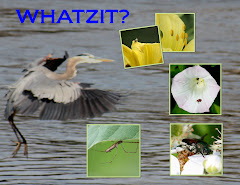
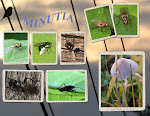
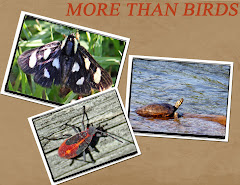
Now back to the story. As you can see from the pictures above that the bugs all have one head. These are, according to Jim Bob Billy Ray, "normal bugs." But he saw the "Siam bugs" and had to tell someone, so Sadie and I were there, and we were the lucky ones.
As we walked over to the bushes where he had seen the "Siam bugs," he kept talking about how he might win the "Nobel Prize in Insects" and become a "gazillion-aire." He went on and on about how proud his daddy would be of him, and that with the money he got from this discovery, he could now afford to get married to the woman he had been "courtin'" for nearly 25 years; her name is Betty Jo Smith, and they may be related, but Jim Bob Billy Ray says, "I don't mind that. She is a purty woman."

As we got to the bushes where he saw those "Siam bugs," I started taking picture of the orange and black striped bugs, seen above. I snapped away, and Jim Bob Billy Ray looked and looked, but he couldn't find those "Siam bugs" to save himself.

He said, "I bet one of those other walkers might have snatched that bug, and now my future is bleak." He walked away mumbling to himself, "The only good break I've ever had in my life, and someone has done snatched it away."

I stayed there and took some more pictures of the bugs. And then I saw a very large bug and took several pictures of it. As I got closer, I said to myself, "By golly. Jim Bob Billy Ray was right. There is a bug with two heads."

I took several shots before I realized that that wasn't one bug with two heads, but two bugs mating. I took a few more pictures and then felt I was intruding upon a private moment and left.

Now, some of the story above is true (the first two paragraphs), but it was still a very good morning on the Riverwalk.

Sunday, July 25, 2010

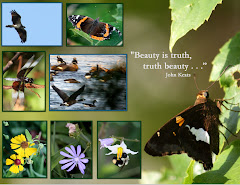
"BEAUTY IS TRUTH, TRUTH BEAUTY"


(JULY 25, 2010) Though hot, in the low 80s, as I began my walk this morning at 6:30, the woods, the sky and the river were full of life.

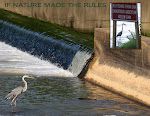
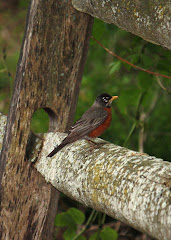
In the woods I saw a robin moving along, listening, and then pecking the ground, coming up with breakfast, a worm. In the beautiful blue sky I saw an osprey fly over, heading up river, and then swirling downward to another air current, and then flying out of sight. In the river I saw a heron standing on some fallen trees in the river. I moved to the bridge going to the train station and got some interesting shots from above this blue/gray statuesque bird.

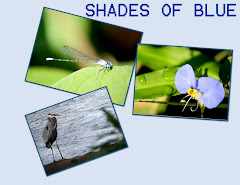
The birds were not the only life on the river. Many flowers were in full bloom shouting forth their colors of yellow, purple, blue and white. They provided a lovely contrast to the green foliage along the banks of the river.

As always, the flowers attracted bees and butterflies and other insects finding the aroma and pollen irresistible. The bumble bees hung in all directions around the flowers. They would hang upside down, sideways, inside the flower in an almost embracing position, and would often visit a flower continuing to fly and not stopping to land. Sadie has learned to stay away from these stinging insects, though they present a mighty tempting target for her.

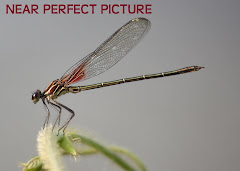
Dragonflies and damselflies are also attracted to the flowers. The damselflies grasp the plant completely enveloping it underneath. Damselflies are more elegant in their positioning. They often just hold on by their legs while their entire body hangs in space; sometimes, however, they do hold on exactly like the dragonflies. Sadie will spend 5-10 minutes pointing at a damselfly when she spots one. Their darting around the leaves and flowers tends to fascinate her.

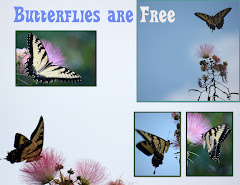
Butterflies also seem to get her attention. The magnificent colors of these graceful creatures as they move about the leaves and the flowers draw her to them as flowers draw butterflies to them. Today I saw a number of different varieties of butterflies. They are interesting in that they are sometimes very predictable, and at other times they just show up unexpectedly. Usually, on a warm day, they can be spotted on flowers in several select areas of the Riverwalk. Today was not such a day since there were only bees there.

However, a particular brown and white and yellow butterfly was pointed out by a jogger who had stopped to talk with me. She noticed the beautiful butterfly on a tree behind me. I turned and started taking pictures.

Once I got home and looked at the pictures, I noticed that the beautiful butterfly had a tear in its wing and was rather dreary in the texture of its coat, but its color was very attractive.

This butterfly further pointed out to me the second part of Keats' quote (above) - "Beauty [is] truth." For the artist to depict the beauty of nature as it is rather than how he wishes it were, he must recognize that the truth of beauty in nature is that, up close, beauty can have its flaws.

With that butterfly there is something to be learned here as it relates to human nature. All humans, from the New York fashion model to the person with a terribly burned and disfigured face, have beauty. The nature of humankind is that all encompass a special spirit of beauty, and God, if you wish, which makes even the most horrible looking human - beautiful.

As with the butterfly, humans all have flaws; they are not perfect. However, that does not distract from the beauty of humankind. To accept this about beauty is best summed up by John Keats when he concludes in his poem, "Ode on a Grecian Urn," with:
"Beauty is truth, truth beauty, — that is all
Ye know on earth, and all ye need to know."

It was another good, but hot, day on the Riverwalk.

Friday, July 23, 2010

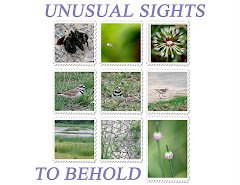
STRANGE THINGS SEEN


(JULY 23, 2010) The English poet John Donne wrote:

Go and catch a falling star,
Get with child a mandrake root,
Tell me where all past years are,
Or who cleft the devil's foot,
Teach me to hear mermaids singing,
Or to keep off envy's stinging,
And find
What wind
Serves to advance an honest mind.

If thou be'st born to strange sights,
Things invisible to see . . .


Donne wrote about things impossible to see - strange things, strange sights. Each day on the Riverwalk, Sadie and I are "born to strange sights."

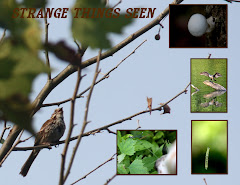
This morning, as we were walking in the dark woods, a bright white object caught my eye. The woods were dark, with shadows of trees, but this one object lit up like a light bulb. As we walked closer to it, I realized that I was seeing a perfectly shaped white mushroom growing out of the side of a tree. It was like many I had seen growing on the damp floor of the woods, but never have I seen one growing out of a tree.

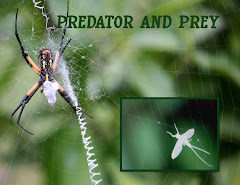
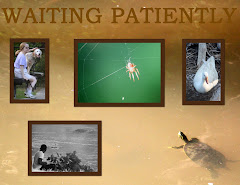
Further along, I was looking at a damselfly when I noticed a spider's web. While looking at the web and trying to see the spider, I saw a small winged insect flying toward the web. "DOOMED," I thought. But, much to my surprise, the insect hit the web, bounced off and flew over the web into the woods. It seemed like a small miracle.

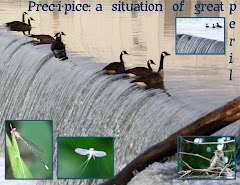
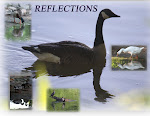
At the 3/4 mile mark from Dan Daniel Park, I had been missing the cormorants that had, for years, frequented the large tree that was down in the middle of the river. This morning I saw that two of the creepy black water birds had returned. As I watched the two birds spreading their wings to dry off in the warm sun, one spent several minutes staring down into the river at what appeared to be . . . himself. He was quite intrigued by the bird that was looking back at him.

Inch worms always fascinate me. The fact that they just seem to hang in mid-air is intriguing. This morning I saw an inch worm that had dropped a thread so thin that I couldn't see it, and the camera couldn't pick it up - the inch worm seemed to hang in space.

And finally, as we were returning, we had arrived at the bridge which marks one mile back to the car. Beside the bridge something had attracted Sadie's attention. As I was talking with some people who had wandered by, she was zeroing in on a damselfly. She inched closer and closer until she was about two inches away from this clueless insect.

I could tell that her breath was below her perceived prey since the foliage below the insect was moving, and the damselfly seemed to have no idea that Sadie was there, until . . . the damselfly did something I have never seen one do before. Though the insect had remained stiff and straight, as Sadie approached, the body was bent into an upward position, perhaps an impulsive defense to warn away any predator. Sadie wasn't threatened and crept closer and closer until . . . the damselfly flew away, completely unharmed, and Sadie looked at me with the look I often see that says, "Well, another one got away."

A perfect mushroom growing out of a tree, an insect not ensnared by a spider's web, a narcissistic cormorant, an inch worm suspended in space with no apparent support, and a damselfly that used a defense mechanism unsuccessfully, but survived anyway, were some of the "strange sights" Sadie and were born to this morning.

It was another good day on the Riverwalk.

Thursday, July 22, 2010

"FISH GOT TO SWIM; BIRDS GOT TO FLY"


(JULY 22, 2010) Earlier in the week I saw a couple of fishermen who had caught 7-8 catfish, one being about three feet long. The fish were laid out on the ground, completely out of their environment, and still gasping for breath. A lady who was standing there said, "I hate to see animals, any animals, suffer." I agreed.

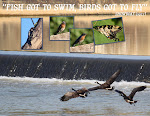
This morning I saw a number of birds and insects in trees, much to the CHAGRIN of Sadie, knowing that they got there by flying. The trees and the river are natural habitats for birds; only the water is for fish.

Humans, too, are often taken out of their natural habitat and placed in situations that make them uncomfortable or ill. Such is the case with what has happened in the Gulf of Mexico where not only 1000s of birds and fishes have died or gotten injured by this mistake, but many workers are getting ill from the fumes of the cleanup. Fish got to swim; Birds got to fly; Humans got to be more careful so they can.

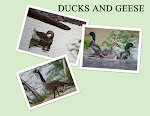
I've often thought of the wildlife on the Gulf as I see the wildlife each day as I walk on the Riverwalk. The environment is fragile. One morning a walker stopped and as we chatted, he commented that a number of years ago the Dan River was a dead river. There was little life on it, few birds, and not a sign of the great blue heron. As the city and industry worked to clean up the river, wildlife gradually came back. The small song birds, and then the fish became more plentiful, and then the water birds like ducks and geese, and then, finally, the great blue heron was seen on a regular basis. Now there are a variety of birds on the river including the heron, cormorants, osprey, coots, mergansers, and even a bald eagle can be seen flying overhead.

When the environment is disrupted by anything that throws out the balance of nature, whether it is industry waste or over population of animals, the wild life and all of nature suffers.

Man is not always the culprit. Man is often the savior of endangered species. Many animals that might have become extinct through the natural changes of the environment are now plentiful because some humans worked to protect them from natural destruction. Had it not been too late and someone would have noticed, perhaps the dodo bird would still be around and even the "mythical?" unicorn may be seen in the field along the river.

But all of this is based upon two simple ideas: Fish got to swim and birds got to fly. Without these two factors, the rivers and skies will be dead again.

It was another good morning on the Riverwalk.

Wednesday, July 21, 2010

LOST


(JULY 21, 2010) Sometimes being lost means looking for a map to find the way; sometimes it means being somewhere except where expected to be, and sometimes it means trying to find your way until something changes that makes the world clearer.

As Elizabeth and Sadie show above, a map gives an indication of where someone is. I have heard it said that if you don't have a map to take you to a place, you will likely end up somewhere else. That applies to traveling and life in general. There are individuals who are like the feather in the movie Forrest Gump - they are blown from place to place with no control over their lives. At the Riverwalk, the map shows where a person is and how far it is from point to point.

Sometimes a map is not handy, so someone may ask another person for directions. Yesterday I was walking back towards Dan Daniel Park from the direction of Angler's Park when a couple asked me how far the trail went from where we were. I told them that it was about another mile and a half to Angler's Park and then they could go beyond that all the way to the airport. They said that they had started at Biscuitville and wanted to see how far they could walk. I told them that upon their return to Biscuitville, they would have walked between 5-6 miles. They were satisfied and turned around to walk back.

This is also the way life is. When a person doesn't have a map for his life, that individual might ask for directions from someone and, hopefully, get accurate directions.

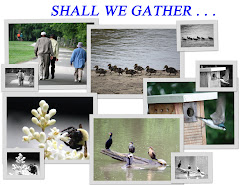
Sometimes "lost" means seeing something out of where it is expected to be. This morning there was large group of Canada geese gathered at the base of the dam near Dan Daniel Park. The geese, for the years I have been walking the trail, had always gathered up-stream. When I saw them at a different place downstream, they looked out of place.

I thought about a short essay by Univ. of North Carolina at Chapel Hill professor Louis Rubin. The essay was called "The Boll Weevil, the Iron Horse, and the End of the Line: Thoughts on the South." In the essay, Professor Rubin sees a small train moving along each day in a very specific location. Later in his life he sees the small train in a different setting and thinks it seems lost, away from where he had always seen it and had, for years, imagined it in his mind.

And finally, sometimes being lost means that eventually you find your way and move on. This morning I spoke with a man I see regularly on the trail. He has been job-searching for many months, and this morning he told me about his latest opportunity. A company in Lancaster, Pa. had contacted him about a job. This was the second job he will have interviewed for in the past two weeks, the other being near Hickory, NC.

For months this man had been lost in his job search and nothing seemed to be paying dividends as he sent out his resume. Now, there was hope as he found his way to at least the interview stage in his job search.

Being lost is never good. However, with a good map, good advice, and good luck (or hope), being lost can result in the joy of learning from an experience and trying to never be lost again.

It was another good day on the Riverwalk..

Tuesday, July 20, 2010

NATURE'S RENEWAL


(JULY 20, 2010) Yesterday afternoon, I noticed a blob of sort on the screen of a window in the kitchen dining area. I thought that a bird had made a mess on the screen.

However, as I got closer to the window, I realized that there was a beautiful butterfly clinging to the screen. Getting even closer, I noticed that there were two butterflies, obviously in a mating position. I grabbed my camera and took a couple of shots from inside before going out to the deck and taking pictures from different angles. After a couple of minutes the butterflies flew off, still attached to each other.

When I went into the house, Elizabeth said, "You bothered those butterflies while they were in an intimate embrace. You interrupted them."

I said, "I told the two to get a room, and they just flew off to do so."

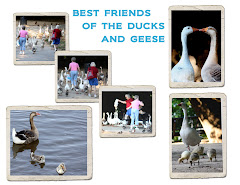
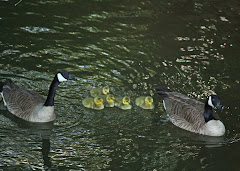
The creation, or renewal, of life is amazing. Each day on the Riverwalk I see young off-spring of the ducks and geese. I see the young song birds as they try out their new voices and their new wings. I have seen the procreation of geese in the river and the mating of lady bugs and damselflies right there in the bushes. I have, also, seen the off-spring of both the geese and the damselflies as Sadie and I walk the trail each morning.

But the results are not so obvious to one who has not ventured forth on the trail daily. For example, the heron that is standing in the river next to the dark woods is smaller and younger than the one that stood there last year. Also, there seem to be more herons on the river.

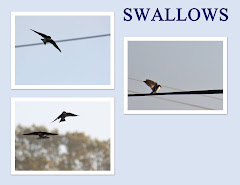
The osprey nest, next to the Brantley steam plant, is vacant; the photographers who had set up their long lens on tripods are no longer interested in the empty nest. The river is now full of Canada geese as the young have now grown the size of the adults. The barn swallows and the blue birds that practiced their landings on tree branches have now joined the adults in the search for small insects as they skim the top of the river.

Even the flora along the river goes through periods of replenishment. The small orange flowers that were once seen near the train bridge are no longer there. The sweet smell of the honey suckle no longer permeates the air since the sweet flowers have faded.

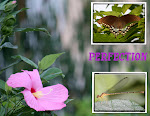
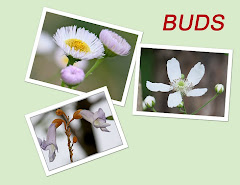
However, some beautiful large flowers are now showing themselves along the banks of the river. Some of these are pink with white insides and some are white with maroon insides. Beside the large blooms of these flowers are smaller buds that will soon burst forth to continue coloring the landscape with nature's beauty. Also, to the side of the blooming flowers are ragged flowers that have bloomed and passed.

Such is the creative hand of nature - always replenishing and always renewing.

It was another beautiful morning on the Riverwalk.